Fuel-cell accuracy
Fuel-cell sensors oxidise alcohol on a platinum electrode and respond specifically to ethanol, so they hold calibration longer. This is the standard for professional and enforcement use.
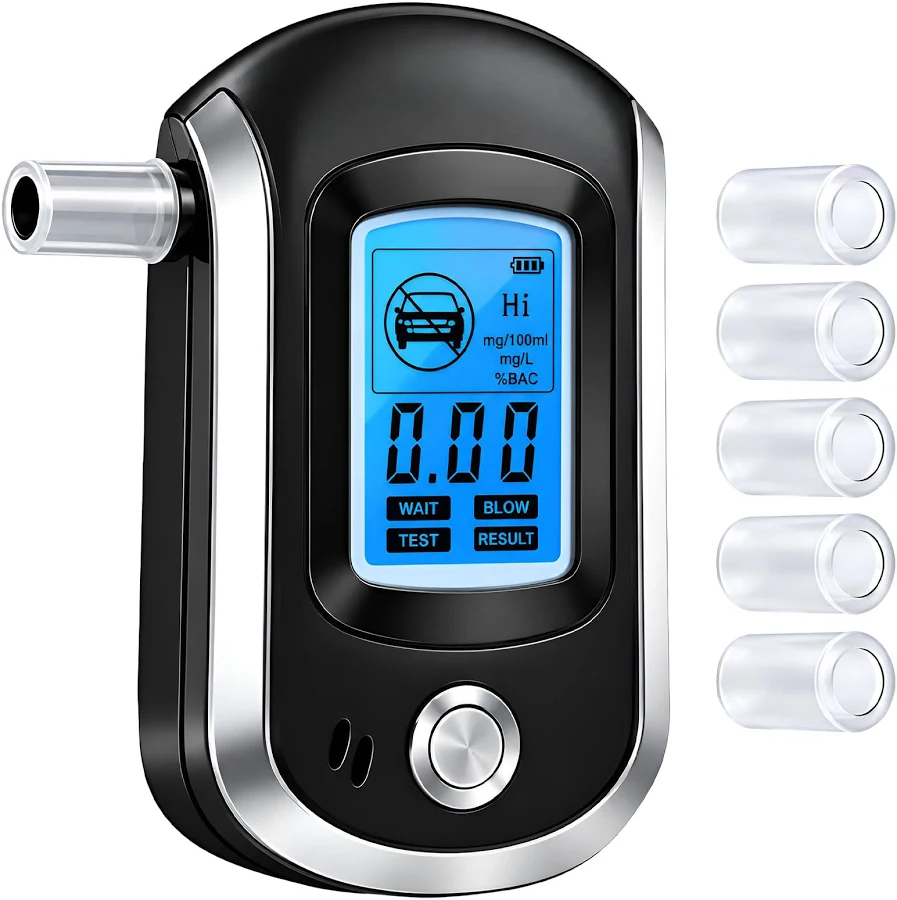
Category: Screening & Detection
Quick, non-invasive breath alcohol testing for workplace safety, transport depots and event entry. Choose fuel-cell models for professional accuracy or semiconductor models for low-cost screening.
Fuel-cell sensors oxidise alcohol on a platinum electrode and respond specifically to ethanol, so they hold calibration longer. This is the standard for professional and enforcement use.
Lower-cost units suit quick screening and awareness, but the sensor reacts to other compounds and drifts sooner, so calibrate more often.
A proper breath sample gives a reading within seconds, which keeps queues moving at gates and shift changes.
Use a fresh disposable mouthpiece for every person tested.
Periodic calibration keeps readings dependable. Ask us about calibration and AMC support.
Audible and visual alerts on most models; memory, printing or Bluetooth logging on select models for audit trails.
| Sensor | Fuel cell (professional) or semiconductor (screening) |
|---|---|
| Typical range | 0.000–0.400% BAC on professional fuel-cell models |
| Typical accuracy | Approx. ±0.005% BAC (fuel cell); approx. ±0.01% BAC (semiconductor) |
| Test time | A few seconds after a valid breath sample |
| Recalibration | Typically every 6–12 months or after a set number of tests, depending on model and usage |
| Mouthpieces | Disposable, replaceable |
| Extras (model dependent) | Test counter, result memory, printer, Bluetooth, back-lit display |
Figures are typical for each sensor type. Tell us your daily test volume and we'll match you to the right model.
For workplace policies, transport and anything that may be questioned later, choose fuel cell. For informal or occasional screening on a tight budget, semiconductor is acceptable if you accept lower specificity and more frequent calibration.
Follow the manufacturer's interval, typically every 6–12 months or after a set number of tests. High-volume sites should calibrate more often.
Yes. Residual alcohol in the mouth can give a falsely high reading, so have the person wait at least 15 minutes after eating, drinking or using mouthwash before testing.
Share your use case and testing volume. We'll recommend a model and set up calibration support.